


Let Go of the Wheel
Updated: Jul 12
I once took a designer's work, crudely cut it up in PowerPoint, and handed it back with instructions on how to do it right. Two weeks later, he quit.
This was 1998, running marketing at an early startup. I owned a Mac, so I was a "designer." (I was not a designer.) Still, I was confident, direct, and sure I knew better. So I rewired his UX design my way and told him how it should be done. He didn't argue. He just left.
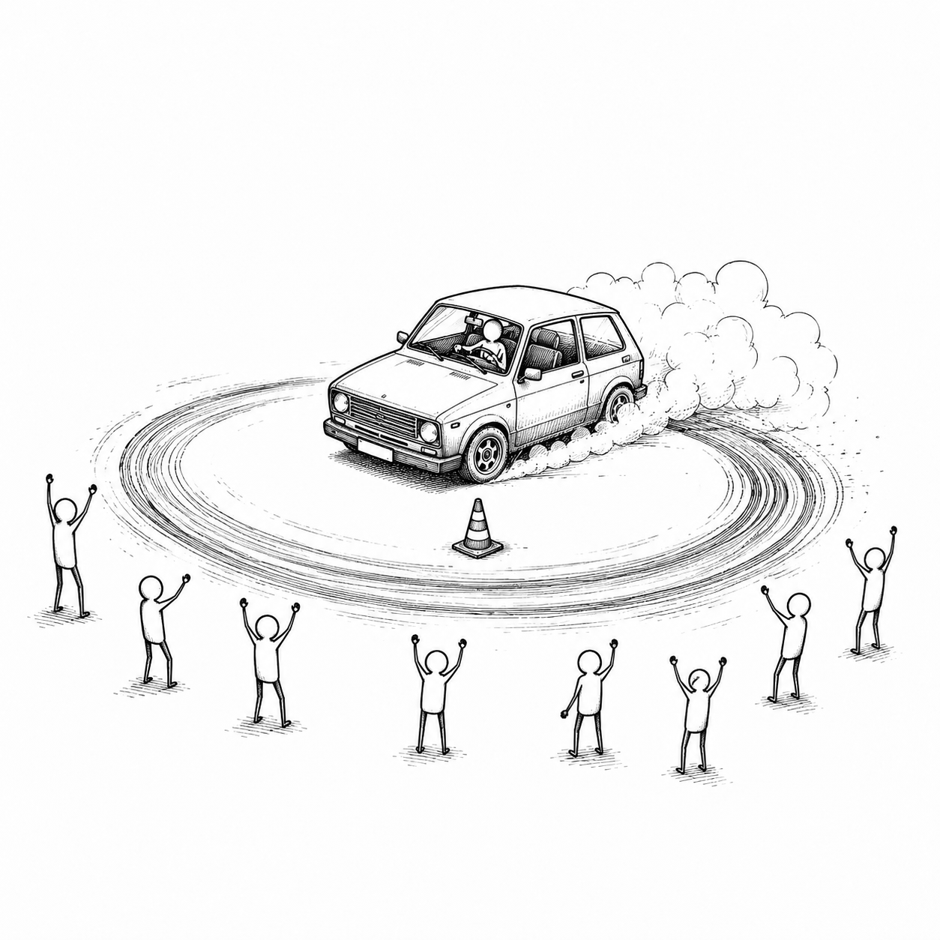
I didn't fully understand what I'd done until years later, managing a team at Dell. I had a bunch of ideas, but none of them took with the team. I had a tight grip, and I needed to let go of control. I get reminded of this every time I drift a car. In racing, you're taught to keep your hands locked at 9 and 3 on the wheel. But when the rear end swings out sideways in a drift, gripping tighter doesn't save you. Letting go does... it lets the wheel spin fast enough to countersteer on its own, faster than your hands ever could.
Leadership works the same way. The instinct that gets you promoted, control, precision, certainty that you know better, is exactly the instinct that pushes good people out once you're leading a team instead of doing the work yourself. A tight grip in racing causes fatigue and overcorrection. A tight grip in management causes hesitation, fear, and your best people quietly heading for the door.
So I hired a web producer with no formal design or ecommerce background, gave her clear goals and the data to test her own ideas, and let go. She ended up driving some of the best results on my team.
Where in your organization are you still gripping the wheel at 9 and 3, when the business actually needs you to let go and countersteer?

Comments